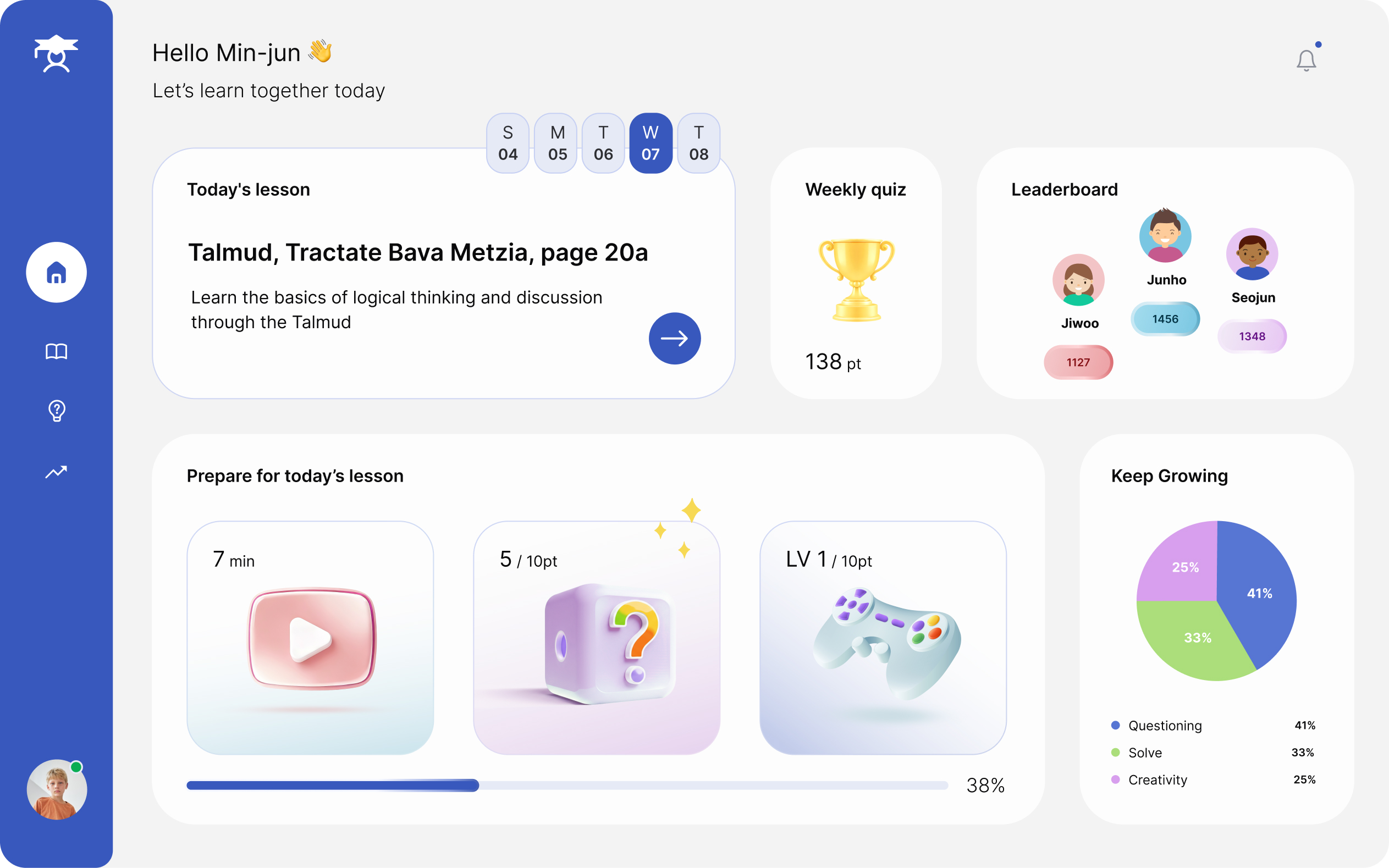
Three things were wrong with this screen
Tap the right side of the image to see the next one, the left side to go back.
Click the right side of the image to see the next one, the left side to go back.
← BackNext →
Home.

The Koreans believe that studying the Talmud is the main reason for the success and wisdom of the Jews, pointing to the fact that they account for 25% of Nobel Prize winners, despite making up only 0.2% of the world's population.
Source: The Times of Israel
Talmind is a tablet app designed to bring authentic Talmud study to elementary, middle, and high school classrooms in Korea.
To help Korean students acquire and embrace Jewish intellectual wisdom.
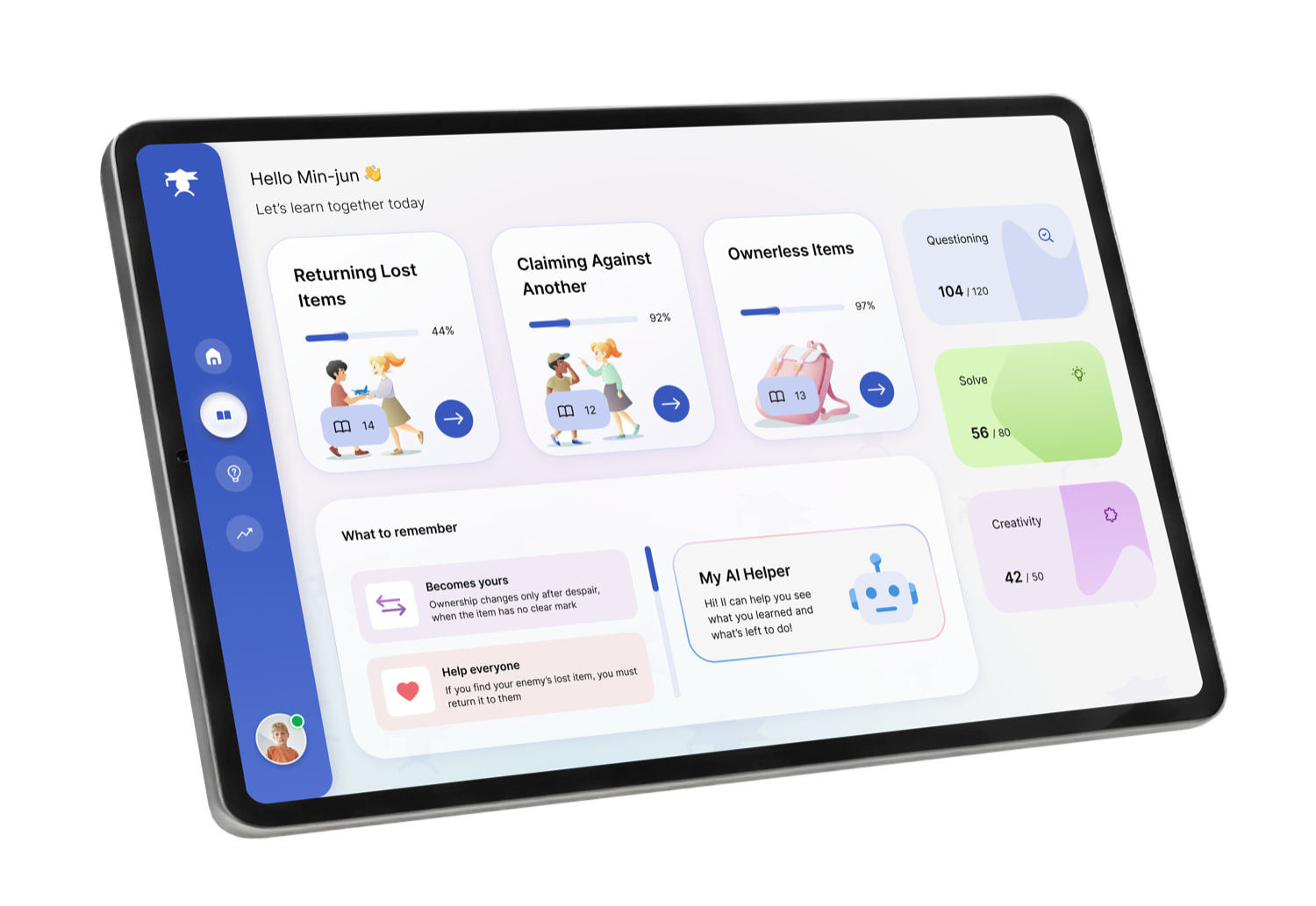
The Korean population, approximately 50 million people, owns almost every household a "book called the Talmud." The Ministry of Education has even recommended including Talmudic stories in children's studies to develop thinking and intellectual skills.Source
In most families, the book called the "Korean Gemara" is a 40-page collection of Talmudic stories, based on the work of Rabbi Marvin Tokayer from the 1970s, similar to moral tales of the sages or Stories of the Sages.Source
There are private educational institutions known as "Chavruta Academies." The academies were founded by Dr. Park Ki-Ryong from KHU University, in collaboration with associations for Jewish leadership and innovative education.Source
Knowledge gaps and limited cultural context lead to an approach that overlooks the fundamental principles, and that makes the material hard to teach well.
Cultural norms make students hesitate to ask questions in front of their peers, so they miss the deeper learning that asking would open up.
Struggle to determine whether their children truly understand the material, develop critical thinking, and actively ask questions.
A proper connection to authentic Talmudic topics, with a clear two-stage learning path: first embedding the dry fundamentals clearly, then moving to the more interesting and deeper material.
A critical pedagogy that actively encourages asking questions, with ongoing feedback on progress.
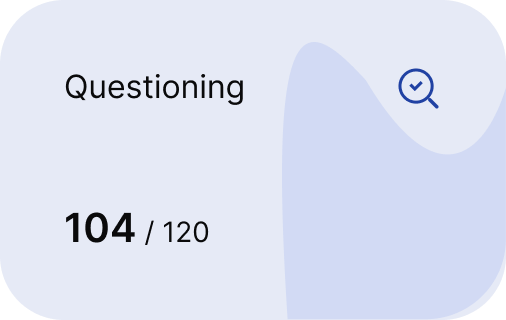
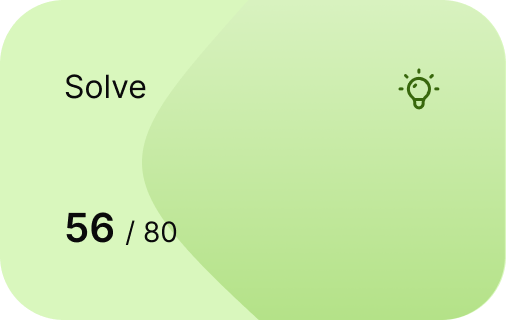
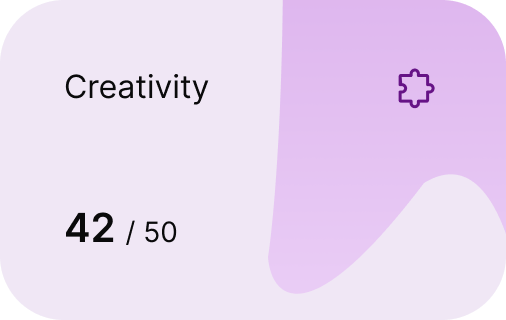
Clear tracking of three parameters measuring their children's skill improvement.
How do I teach students the dry and boring parts?!
The proposed solution:
By bringing it to life through a playful experience and allowing them to be active partners in the learning process.
How can the same game structure work for both Grades 4-6 and Grades 7-12?
The proposed solution:
I trained an AI agent to analyze any Talmudic passage and automatically adapt its content to each grade level, so the game structure itself never has to change.
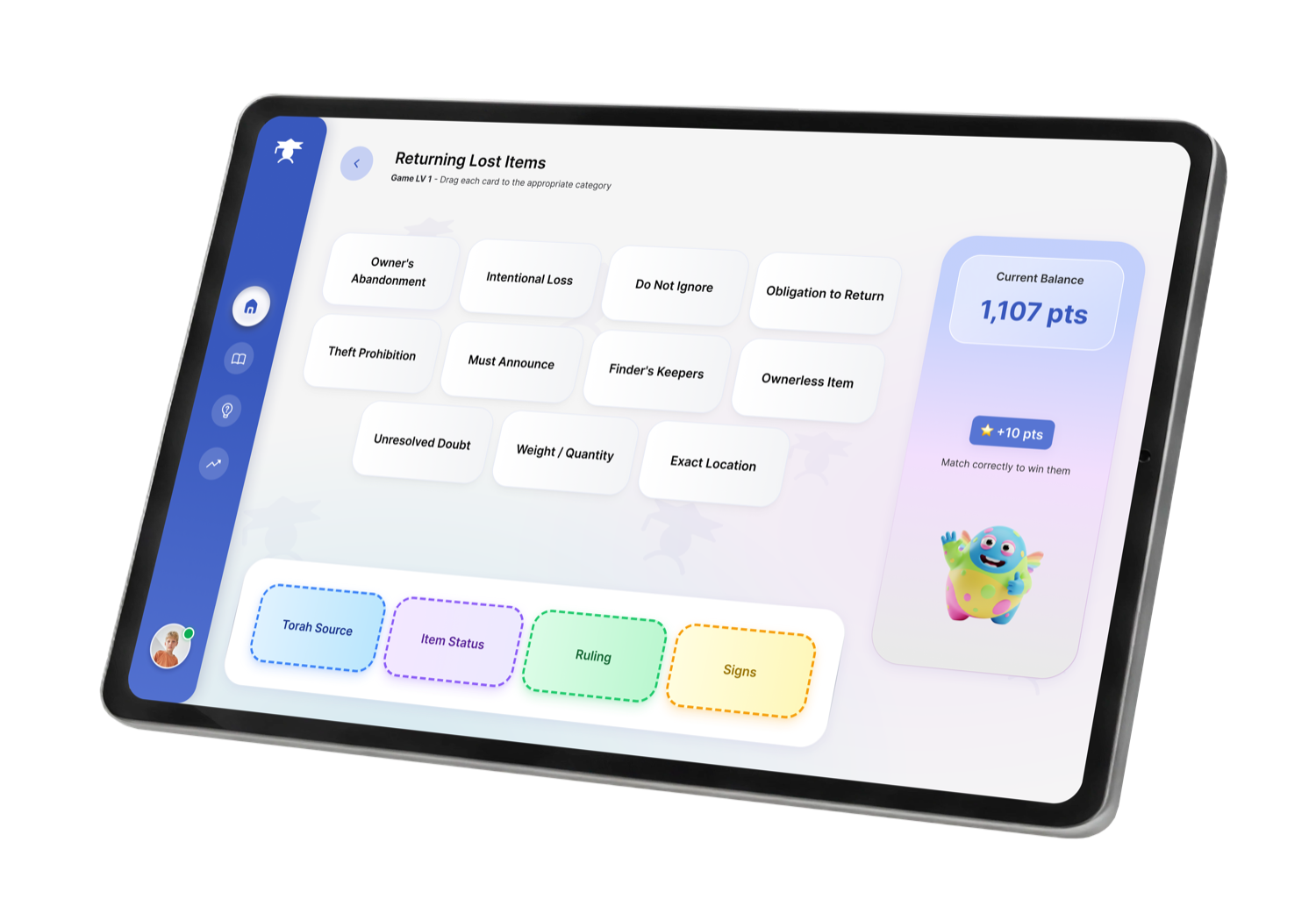
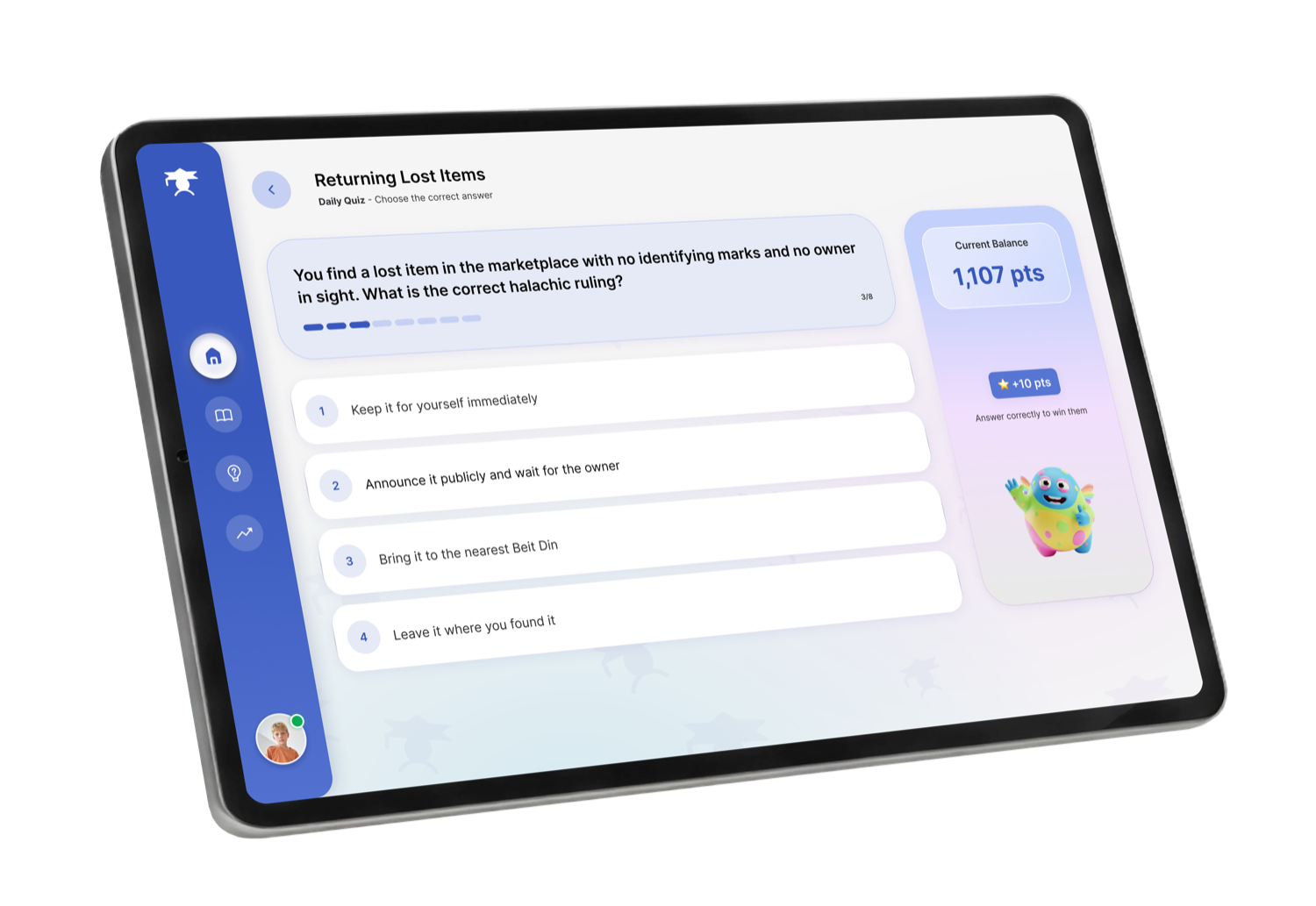
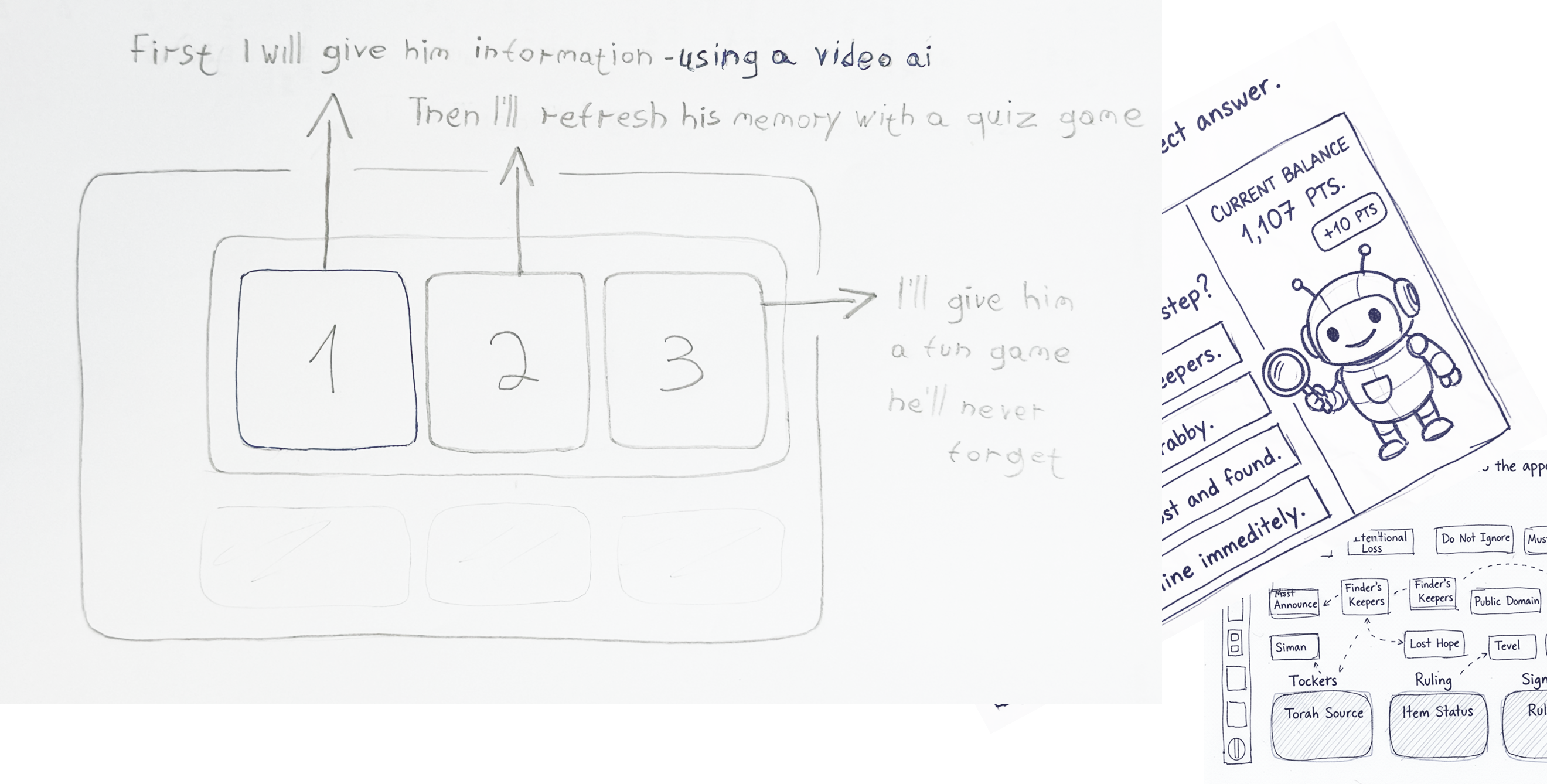
Before a single pixel: the three-step flow, the daily quiz and the drag-and-match game, first worked out by hand.
Three things were wrong with this screen
Tap the right side of the image to see the next one, the left side to go back.
Click the right side of the image to see the next one, the left side to go back.
Home.
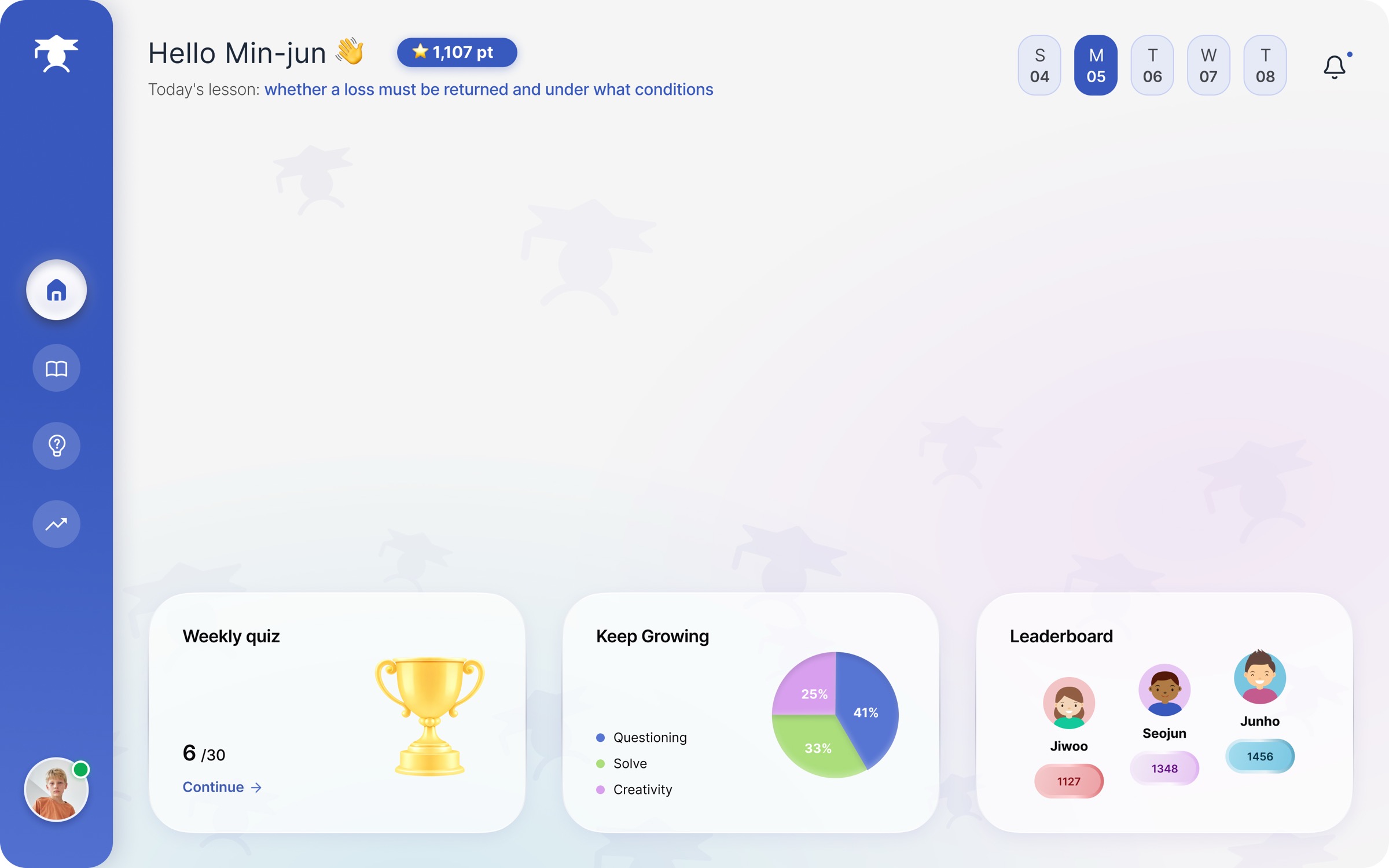
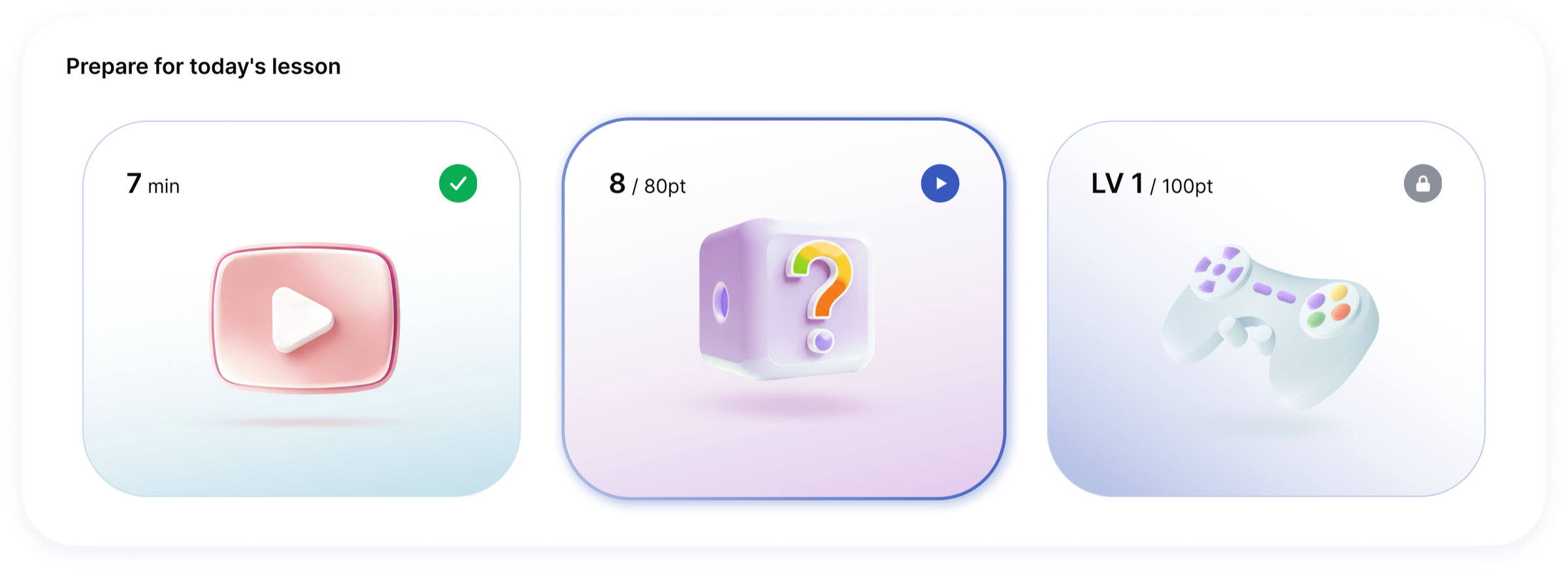
Four screens, each with a few notes of its own
Swipe sideways for the other screens. Tap the right side of a screen for its next note, the left side goes back.
Click the right side of the screen for its next note, the left side to go back. To bring the next screen up, click the next dot.
Home.
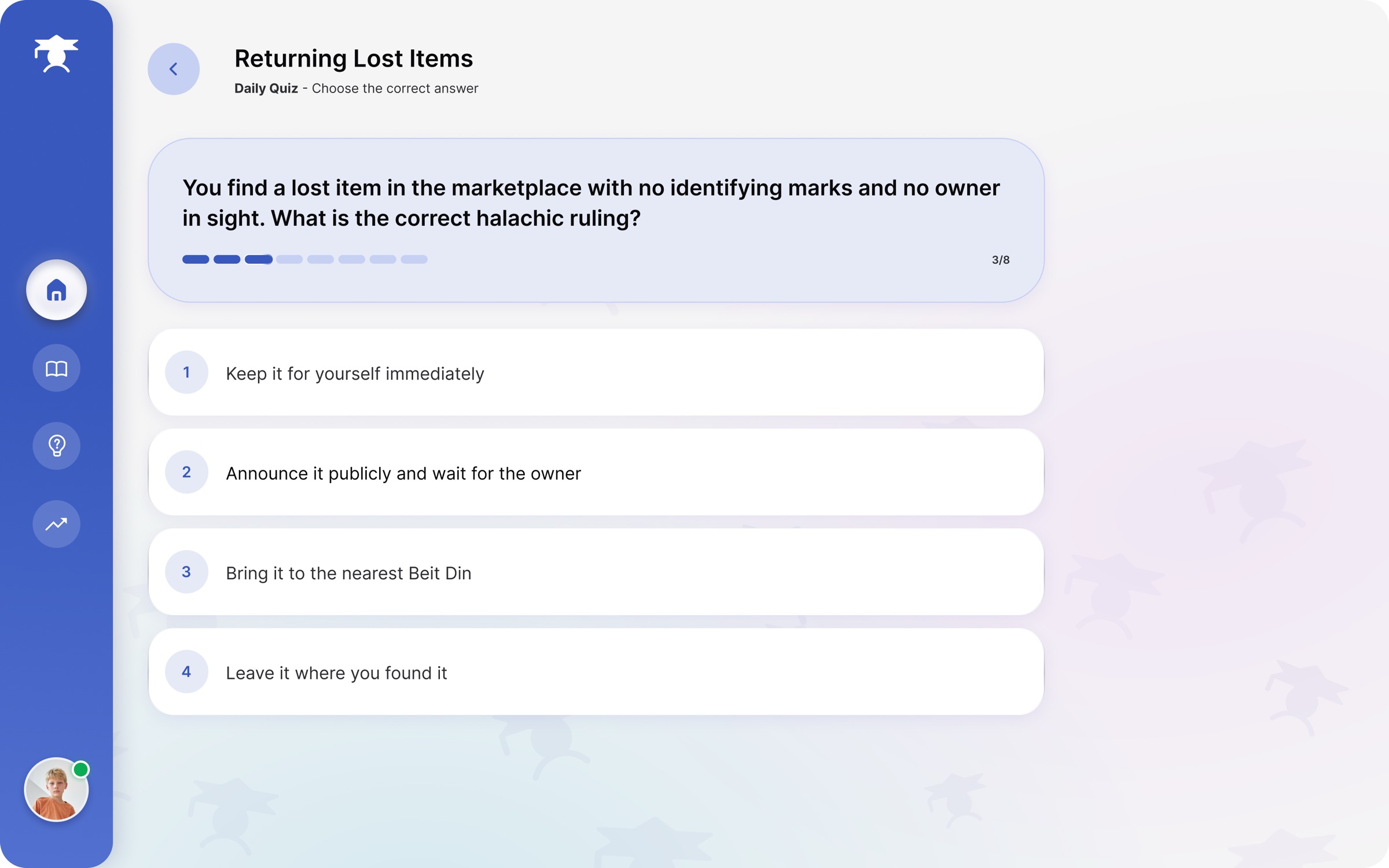
The quiz.
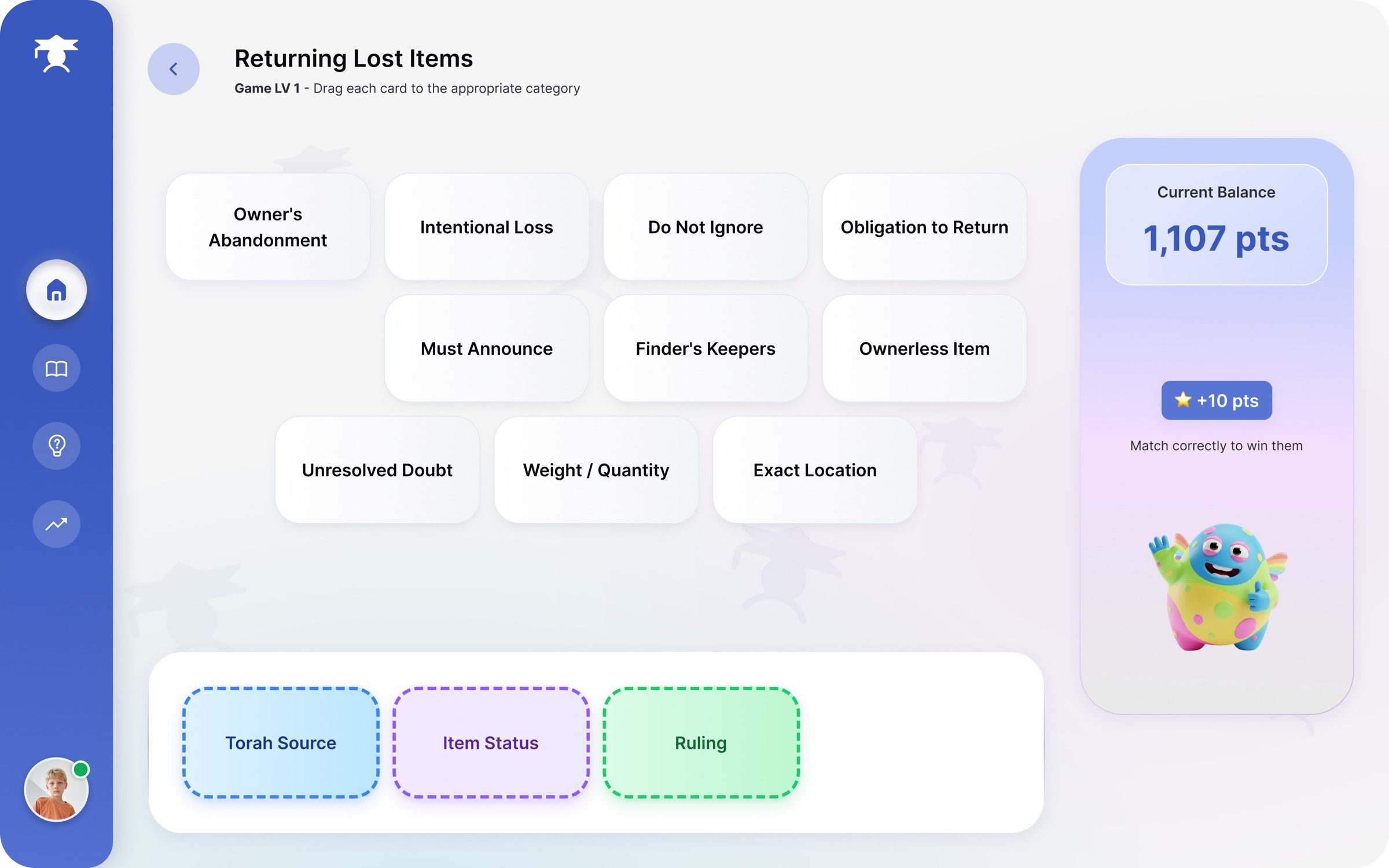
The game.
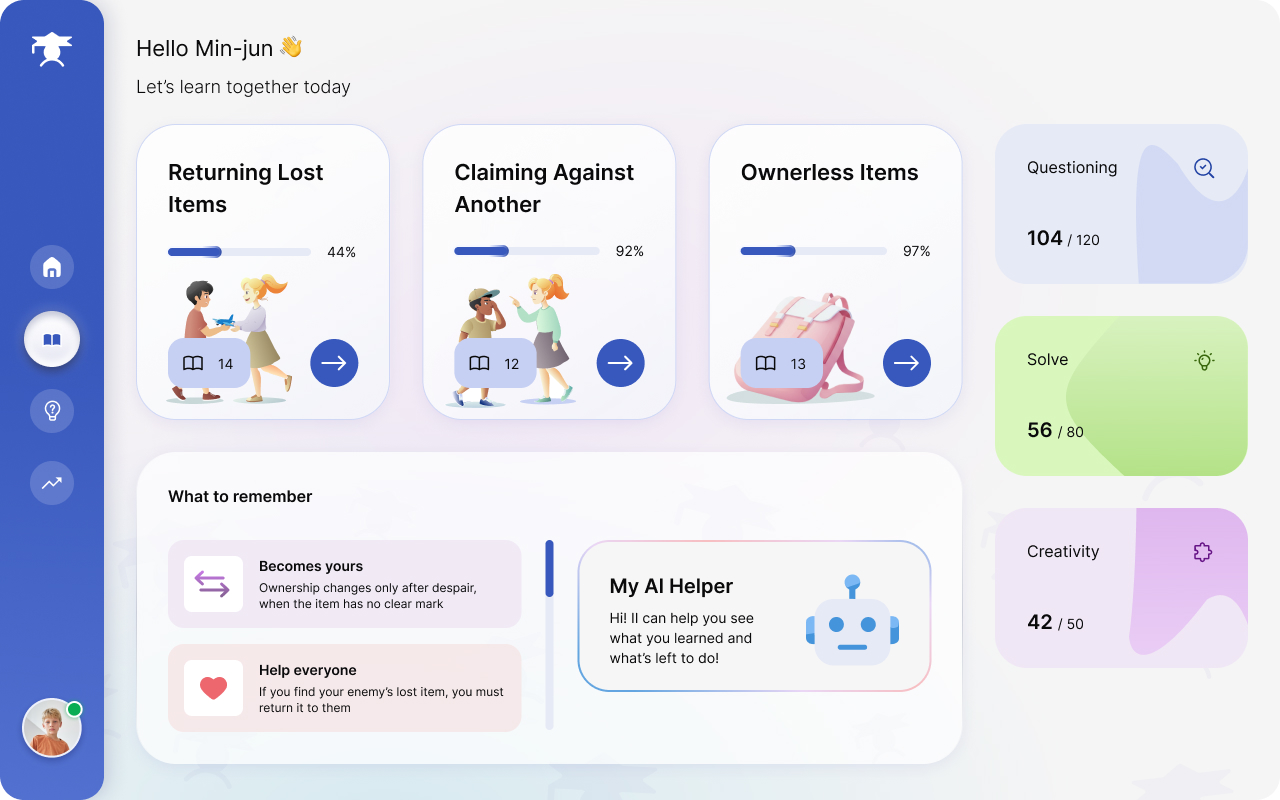
The lesson.